
Newt Season in the Bay Area
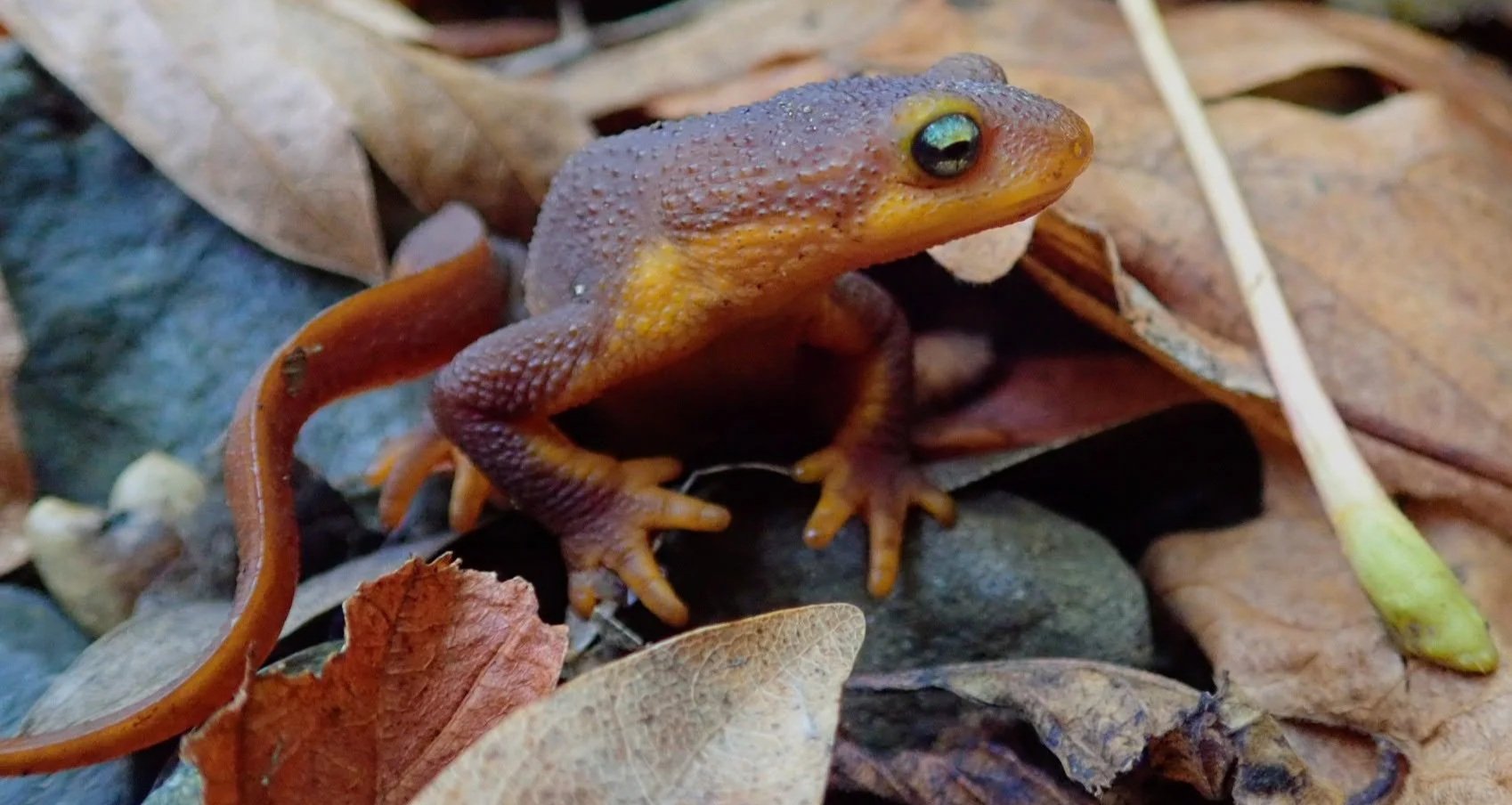
Just below of the surface of ponds across the Bay Area, newts are breeding!
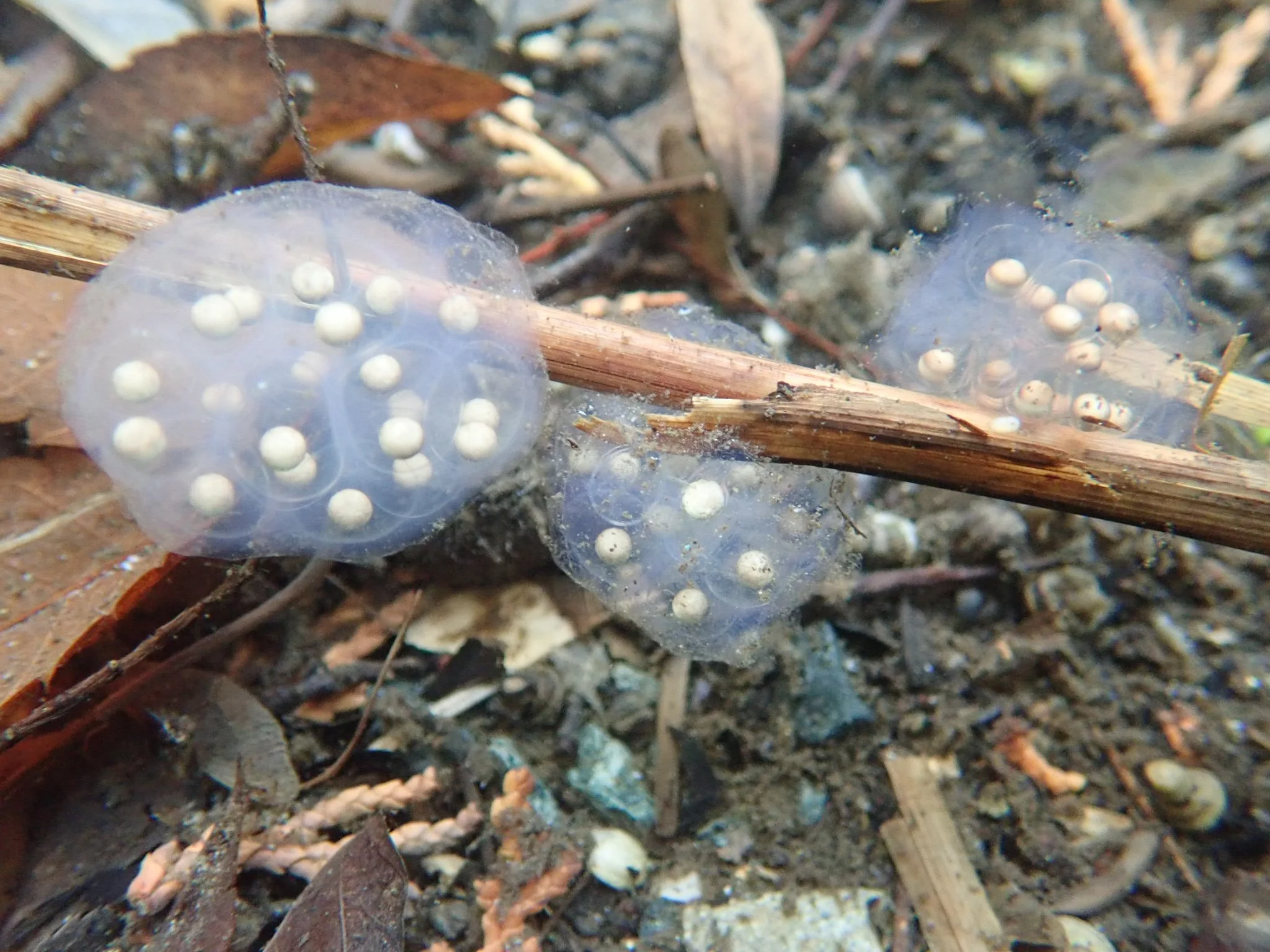


Development of the embryos
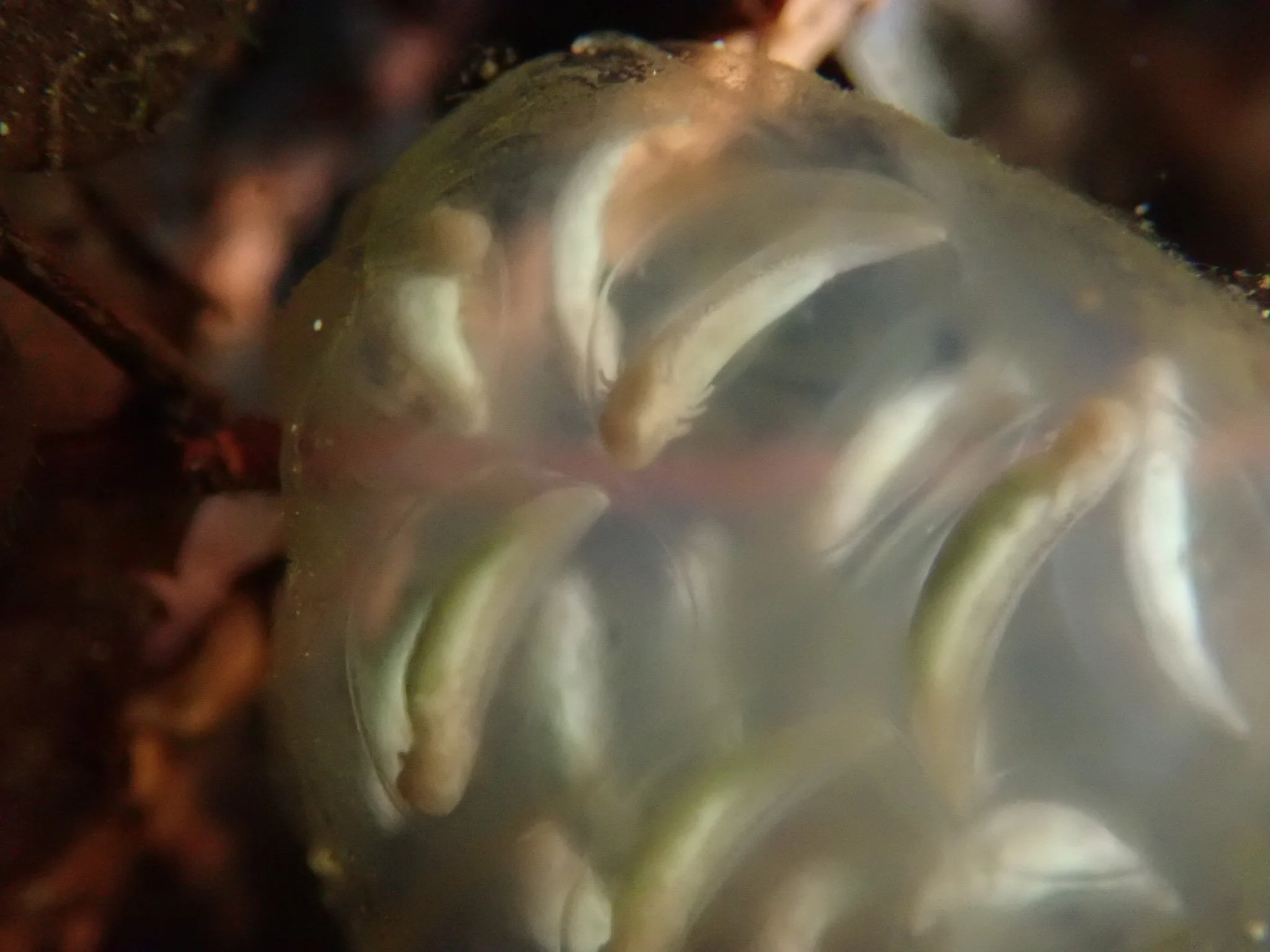
Getting close to hatching! Check out the gills!


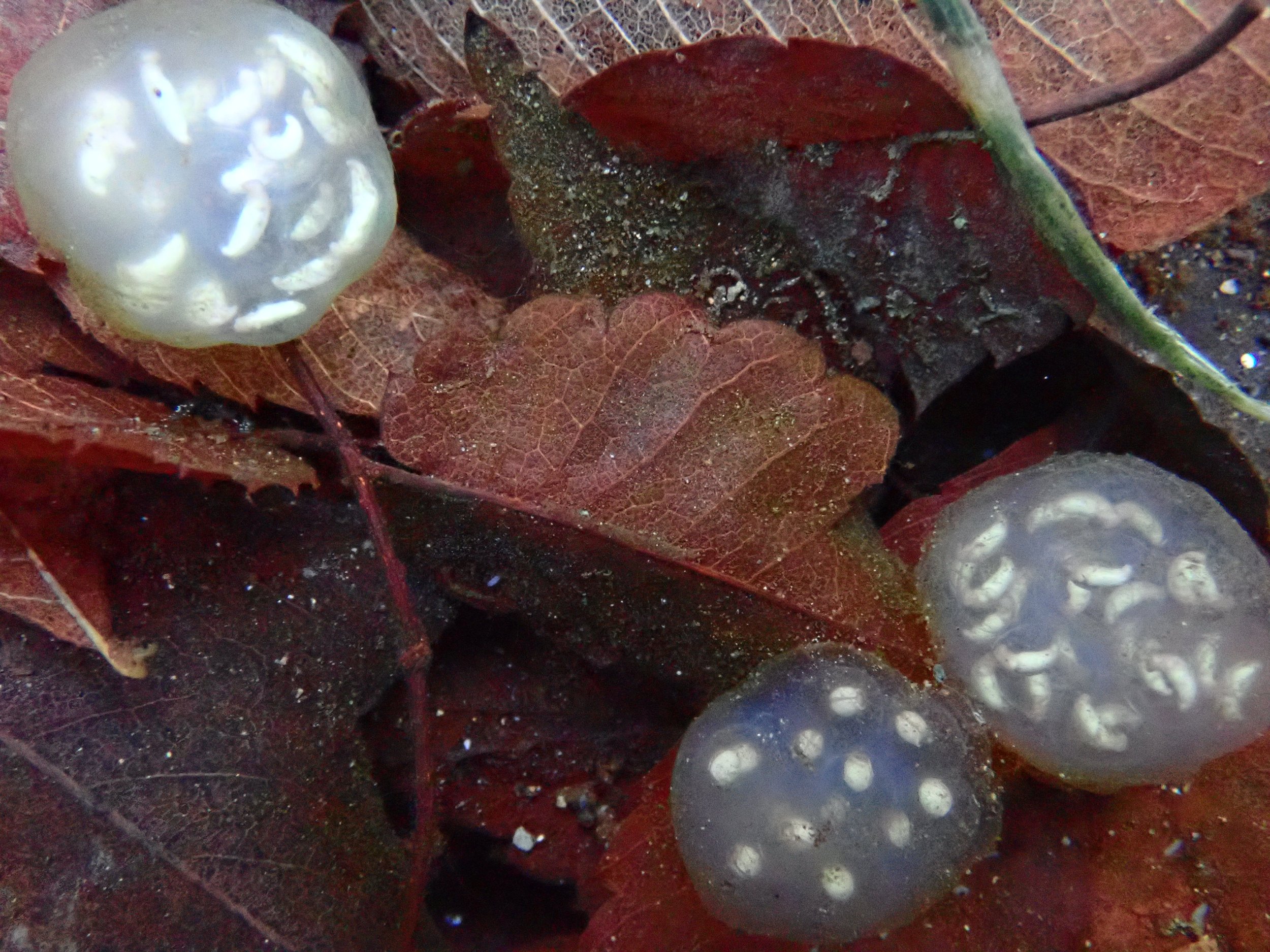
Different stages of newt egg development.
During the rainy season, newts migrate from their home on land to ponds up to 2 miles away. The texture of their skin changes and becomes smoother when they reach their pond. In males, their skin lightens in color and their tail becomes flat to help with swimming.
Newts mate, then lay egg clusters are laid. Females are motionless for long periods of time underwater as they attach their eggs to the submerged vegetation.
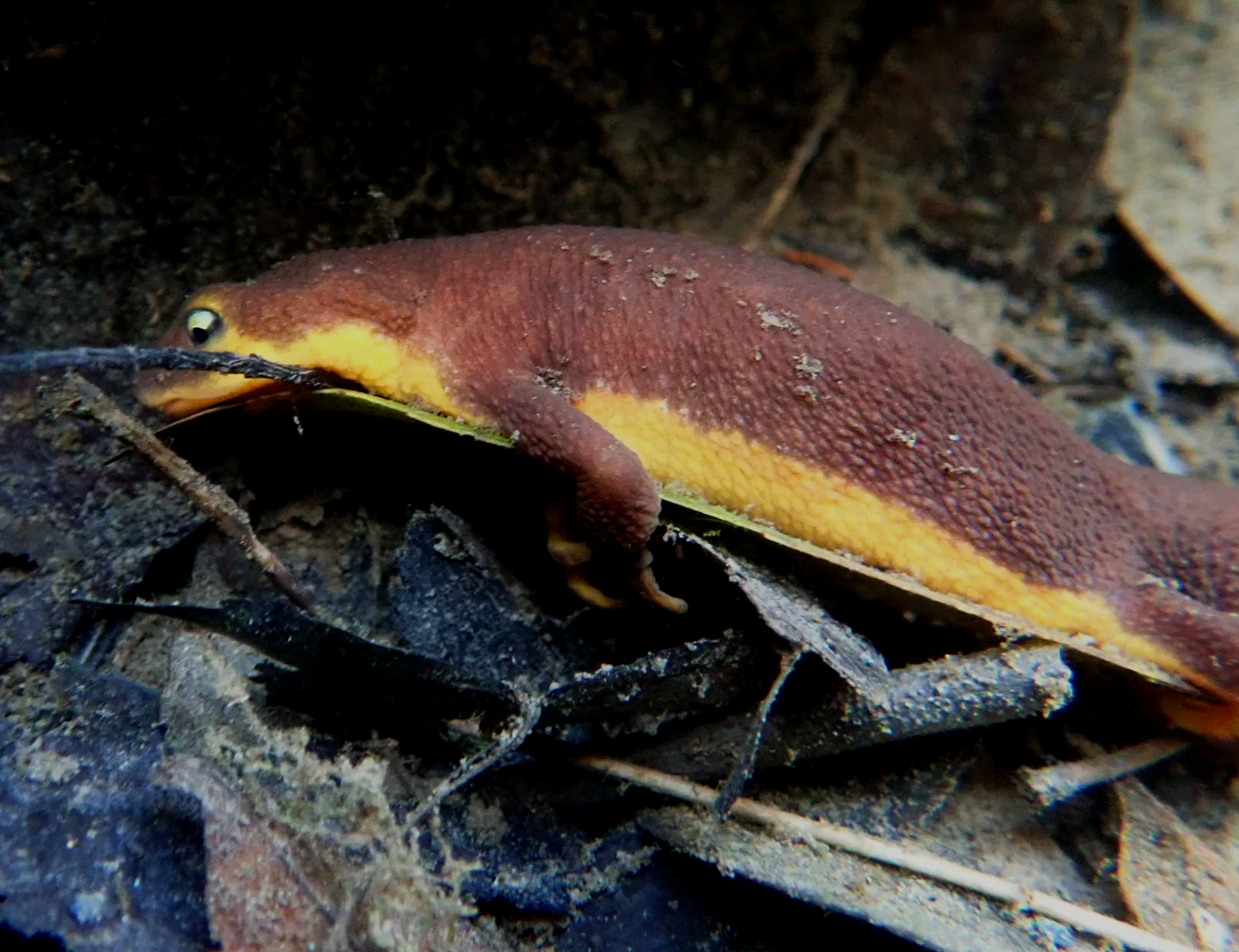
This female has picked her leaf and is beginning to lay eggs.
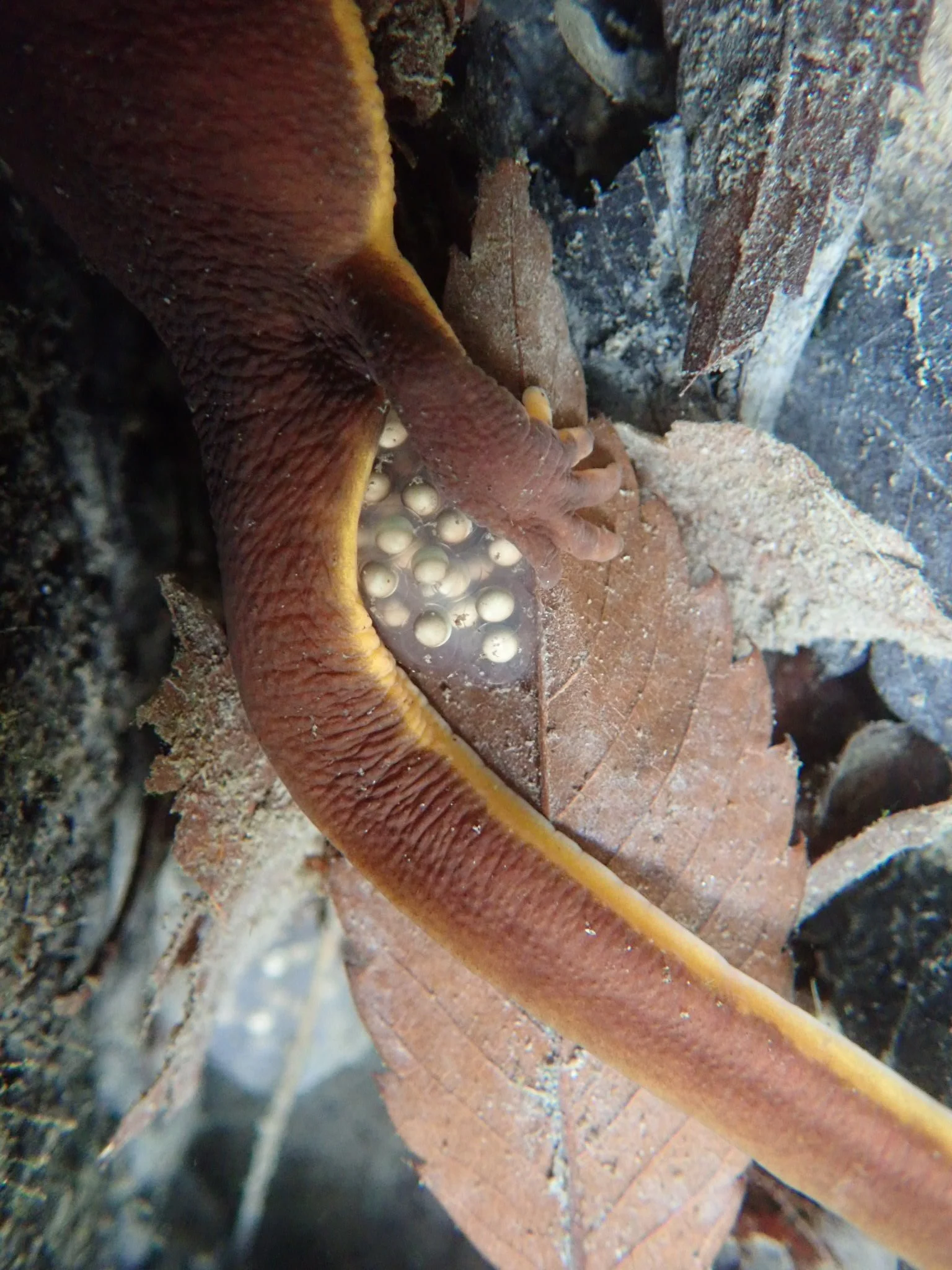
Female laying eggs
Roads have been built through their habitat across the Bay Area, leading to declining populations. Newts move slowly, often at night in the rain, causing many to be killed on their travels.
Their populations have become fragmented across their range.
What can you do?
Avoid driving in the rain at night, especially on known newt migration paths. Drive slowly, move newts off the road in the direction in which they are going if it is safe to do so.
Take data! Anytime you see a newt, dead or alive, add it to inaturalist so scientists can have more data on newt populations and areas that they are being killed in high numbers.
In some places, this data has led to changes to support the newt populations. In Tilden Park in Berkeley, South Park drive is closed for several months so newts can cross safely. In other places, volunteers monitor roads on rainy evenings and move them safely across. Want to volunteer to monitor newts in the next rainy season in San Mateo or Alameda County?
Sign-up here: https://www.thingsthatcreep.org/volunteer
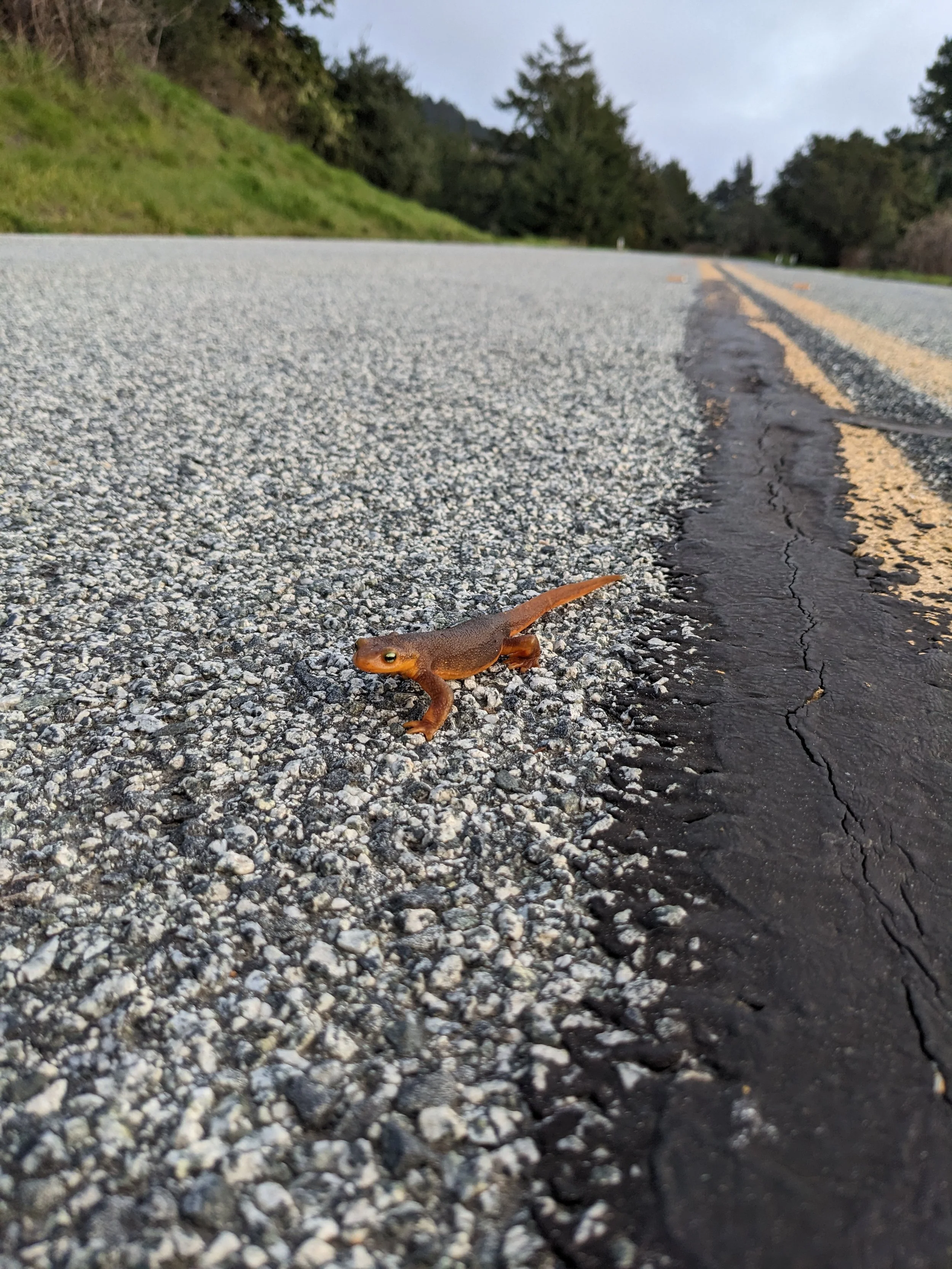
One of several newts spotted crossing the road during the day after a storm the previous night.
One of the best places to view the newt life cycle is at the UC Berkeley Botanical Garden. Due to the renovations of their pond this past fall of 2023, the visibility is great. Eggs masses are visible, glued to leaf litter and branches in the pond. Most breeding ponds are murky due to the rains, but this pond is clear and easy to walk right up to. These eggs will start to hatch over the next few weeks, so make your way to the garden if you want to see one of the most accessible views of the California Newt reproductive cycle. There is an $18 fee to get into the garden (or a discounted rate of $3 with EBT card + ID).

Newts looking for their next meal in the leaf litter of the pond at the UCB Botanical Gardens.