
Urban Salamanders
Rainy Nights Bring Out the Salamanders: Meet Two Urban Neighbors of the Bay Area
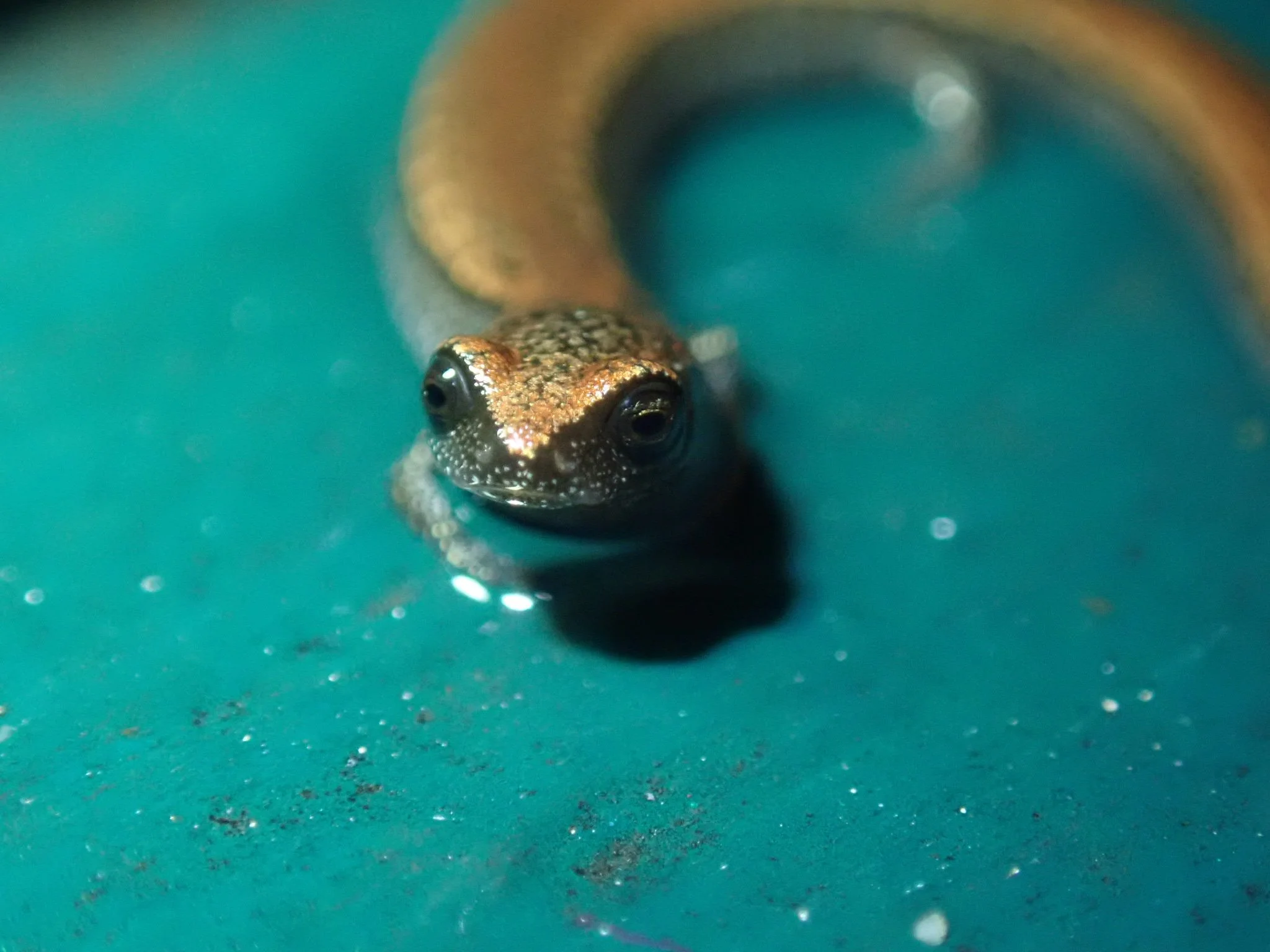
Slender Salamander visiting a front porch in downtown Berkeley during a stormy night.
When the rains return to the San Francisco Bay Area, something magical happens after dark. As sidewalks glisten and gardens soak up the moisture, some of our most secretive neighbors emerge from hiding. If you’re out walking on a rainy evening, even in the heart of a very urban neighborhood, you might spot a salamander slowly crossing the sidewalk in search of dinner.
Two of the most common urban salamanders you’re likely to encounter are the Slender Salamander and the Arboreal Salamander. Both are native to the Bay Area and remarkably well adapted to living alongside humans.
The Slender Salamander
Batrachoseps attenuatus
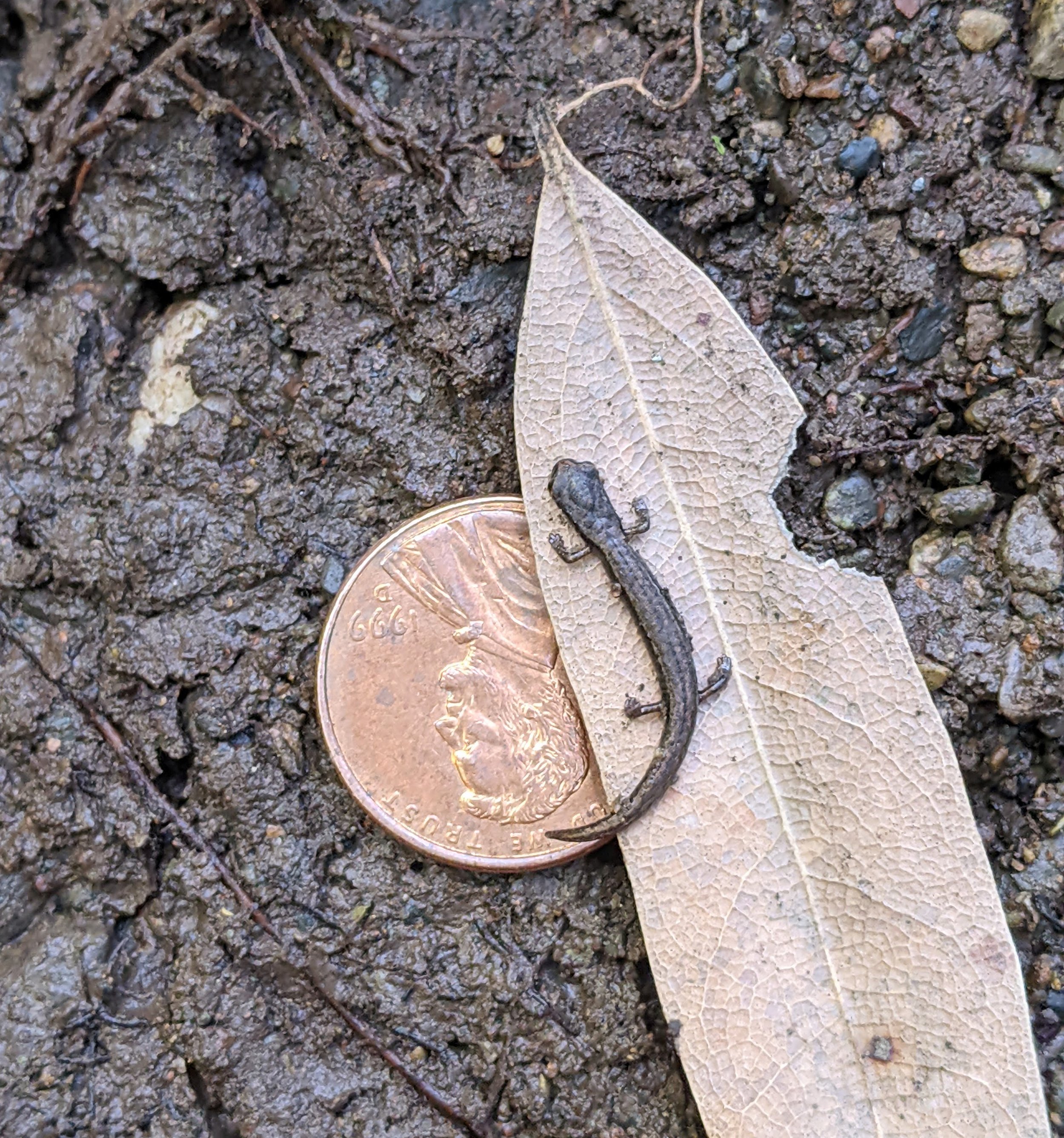
Slender Salamanders are tiny and usually overlooked.
True to its name, the slender salamander is long, thin, and delicate-looking, often compared to a moving shoelace. These small salamanders are lungless, breathing entirely through their skin, which is why moist conditions are essential for their survival.
Slender salamanders spend most of their lives hidden beneath rocks, logs, leaf litter, and garden debris. Rainy nights provide the perfect opportunity for them to venture out safely, and that’s when you might see them crossing sidewalks, driveways, or patios. They’re on the hunt for soft-bodied prey like slugs, worms, and small insects.
Despite their fragile appearance, slender salamanders are tough urban survivors and can thrive in backyards, parks, and green spaces throughout the Bay Area.
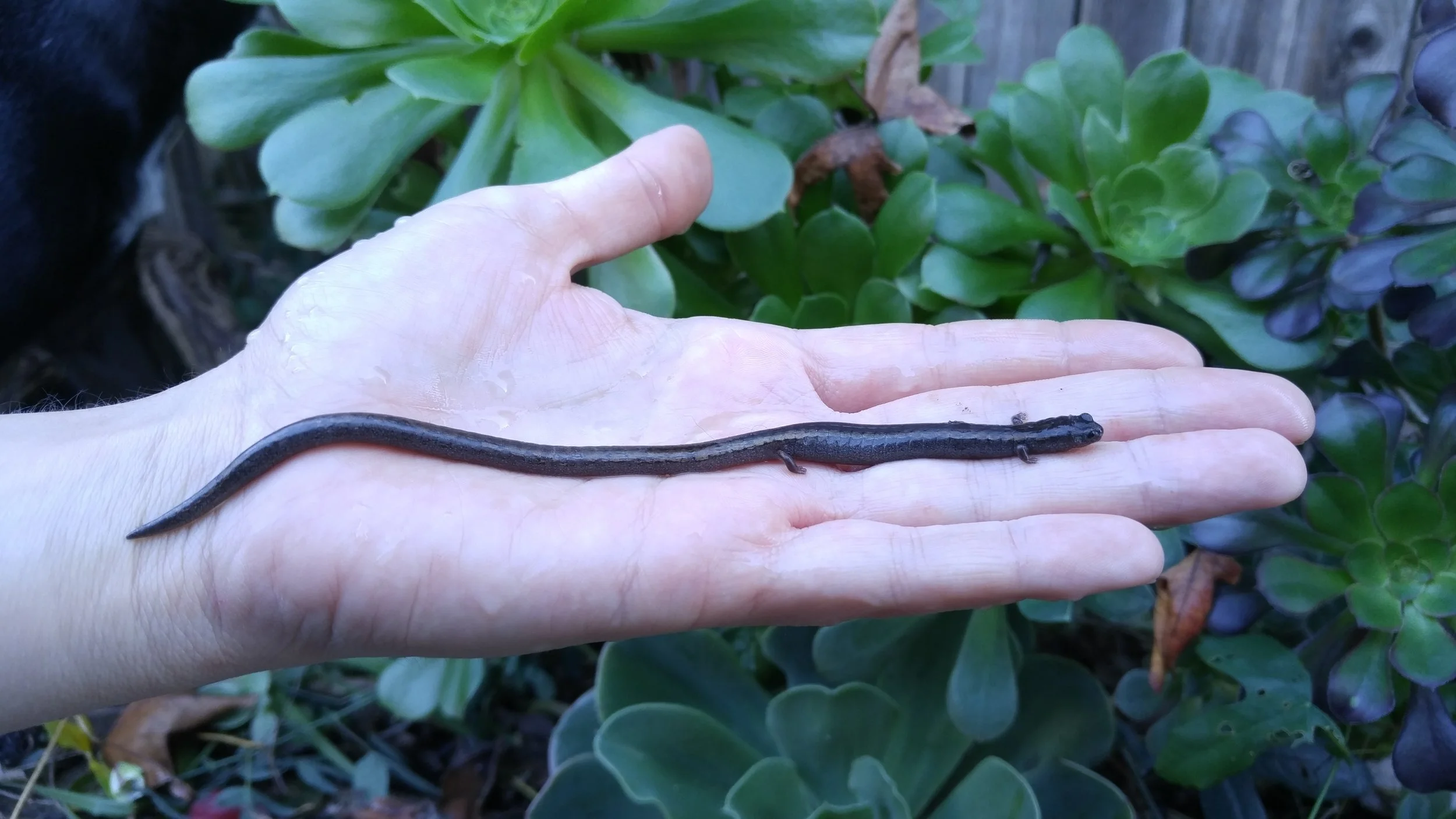
A HUGE Slender Salamander living in a Richmond backyard.
The Arboreal Salamander
Aneides lugubris
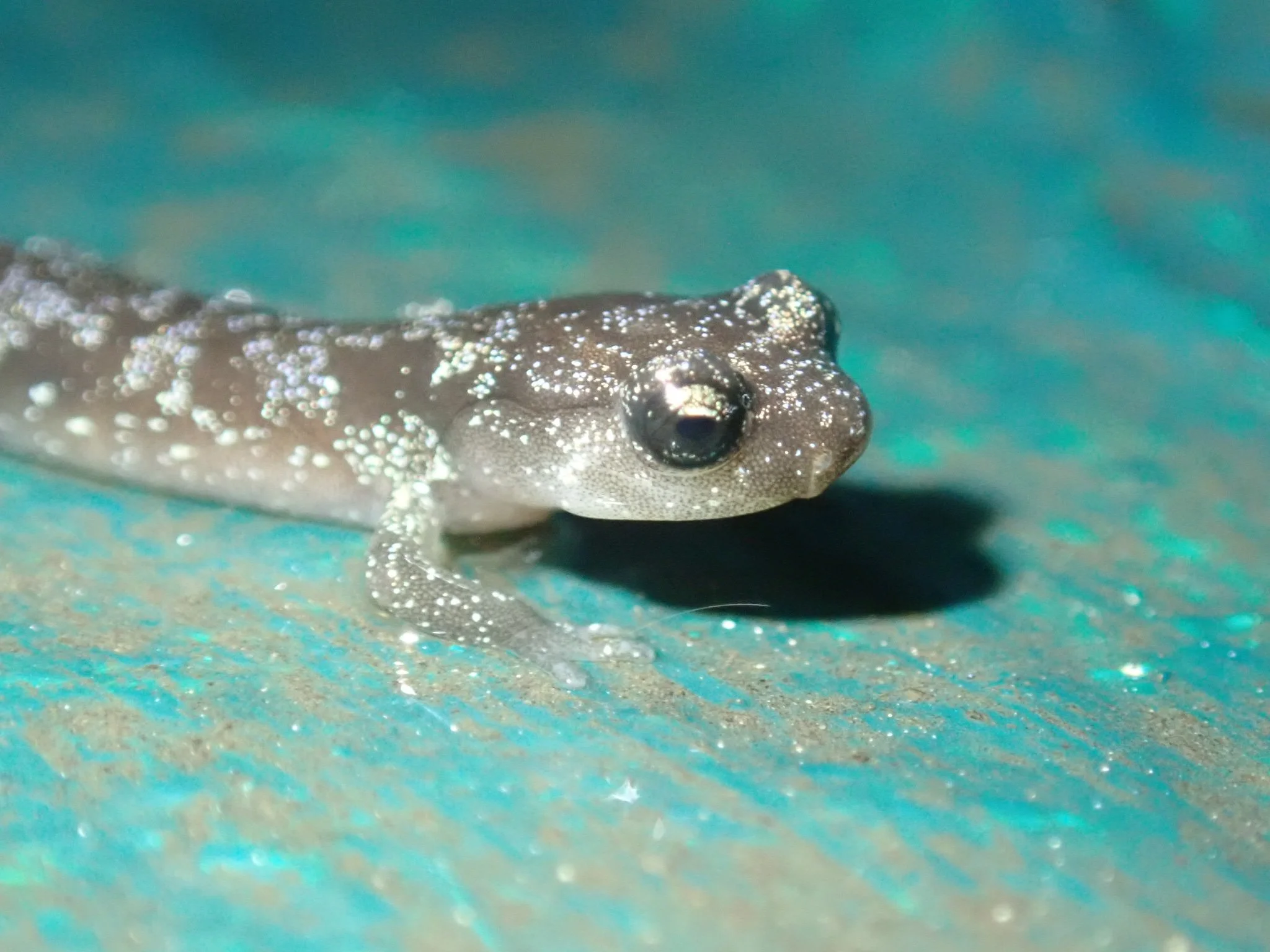
Baby Arboreal Salamander spotted on the same porch and on the same night as the Slender Salamander above.
Larger and stockier than the slender salamander, the arboreal salamander is a true Bay Area original. As its name suggests, this species is an excellent climber and can often be found in trees, shrubs, and wooden structures, as well as under logs and rocks.
Arboreal salamanders have strong jaws and squared-off toes that help them grip bark and climb with ease. On rainy nights, they descend from their hiding places to forage, sometimes appearing on sidewalks and walls as they search for worms, slugs, insects, and even other small invertebrates.
Sharing the Sidewalk
Seeing a salamander out in the rain is a sign of a healthy local ecosystem—even in the city. If you encounter one, enjoy the moment, but give it space. If it’s in danger of being stepped on, gently guiding it off the sidewalk in the direction it was headed can help it safely continue its nighttime journey. Do not touch any amphibian unless you have clean hands without hand sanitizer or lotions, as their thin skin can absorb things from your skin. It is best to move salamanders with gloves on or by moving them onto leaves.
So next time the rain falls and the streets shine, keep an eye on the ground. You might just meet one of the Bay Area’s incredible urban salamanders, quietly going about its important work under cover of night.
Want to learn how to support these amphibians in your own garden? Click Here.